
AUV’s Epic Two and a Half Year Journey Sampling Ocean and Ice Shelves for Argo Program

Australia’s CSIRO used an AUV to collect an unprecedented amount of oceanic data during more than 2.5 years travelling ocean currents, including dives below the Denman and Shackleton Ice Shelves, as part of the Argo survey project.

The data will help “improve climate computer models and reduce uncertainties about sea level rise.”

Data Access and Visualizations can be found here: Argo Program

The Argo float's path underneath the Shackleton and Denman ice shelves. Credit: CSIRO

Full article at: Popular Science 08dec25

DVLs Helping Divers as well as ROVs

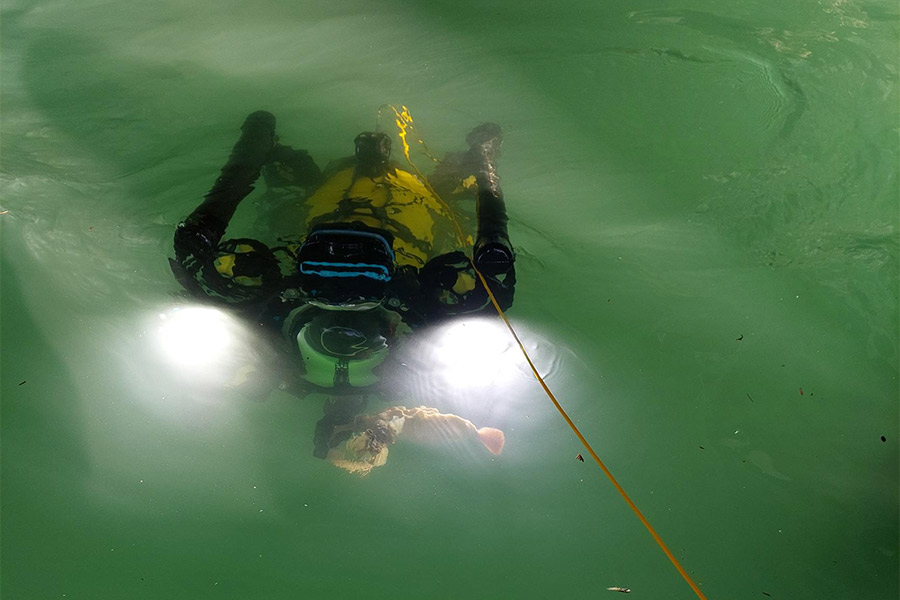
We don’t usually see divers using technology designed for ROVs but Subsea Artemis is making it happen:

Accurate positioning and dead-reckoning navigation capabilities are essential for maintaining situational awareness and keeping divers safe during long-duration underwater missions. Blueprint [Subsea’s Artemis diver navigation system] relies on Nortek’s DVL technology as part of these diver navigation systems to provide accurate velocity information in challenging underwater environments.

Full article at: Marine Technology News 09dec25

WHOI launched AUV to Circumnavigate the Globe

In a world first, WHOI (Woods Hole Oceanographic Institute) launched an AUV programmed to circumnavigate the globe, following a path similar to the Magellan Expedition of 1519.

The AUV is expected to take more than five years to complete the journey, covering roughly 73,000 km (~45,000 miles) at an average speed of 0.75 knots.

Full article at: IFL Science 10oct25

ROV Finds Hidden Canyon in Mediterranean, Teaming with Life Under Threat

Italian marine biologists joined the One Ocean Foundation to deploy an ROV and explore the Caprera Canyon off the coast of Sardinia in the Mediterranean Sea, at a depth of >1,00m (3,281 feet). Teaming with life, the creatures there are struggling to survive tangled in plastic or choked by discarded fishing gear.

One Ocean Foundation hopes that imagery captured will help to strengthen the case for designating the canyon a Marine Protected Area (MPA), safeguarding it from overfishing and pollution.

Full article at: CNN Science 17nov25