So innovative! The team at Blue Trail Engineering custom-built an underwater pan and tilt system for a customer for a camera and twin lasers.
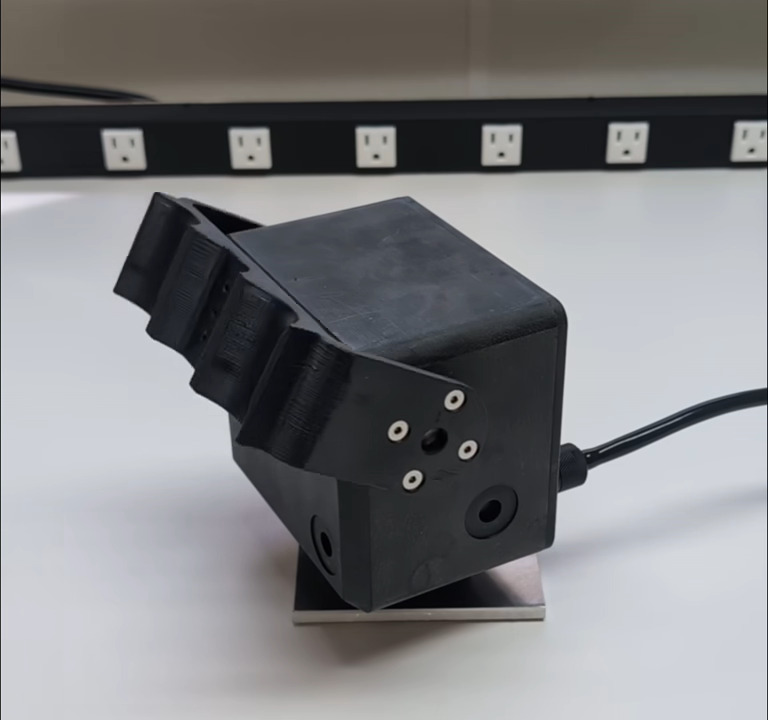
Tested to 600m and cost <$3,000USD. WELL DONE!

Remote Underwater Exploration
So innovative! The team at Blue Trail Engineering custom-built an underwater pan and tilt system for a customer for a camera and twin lasers.
Tested to 600m and cost <$3,000USD. WELL DONE!
The Arctic expedition, Greenland Spreading Zone: Exploring Extreme Habitats in Arctic Seamounts and Hydrothermal Vents (GREAT), spent 18 days aboard the research vessel Celtic Explorer, with ROV Etain searching for hydrothermal vents.
Full article at: Autonocion.com 15sep26
Over the past 9 years, Canadian researchers, NOAA, archaeologists, wreck hunters and the Great Lakes Shipwreck Historical Society have documented at least 14 sites of shipwrecks within the Great Lakes. The most recent identification of freighter James Carruthers in Lake Huron uncovered a load of wheat 112 years after the vessel disappeared in the Great Storm of 1913.
List available at: World Atlas
MIT Lincoln Laboratory researchers in Alaska sent an ROV under Arctic and transmitted data back through the ice using a magneto-inductive transmitter developed by Norwegian defense start-up Havguard.
Researchers drilled through the ice to deploy the ROV equipped with DVL for position tracking under the ice. An aerial drone was also deployed to locate the ROV and measure the performance of the communications. All while temperatures fell to -32C (-25F) and having to stop sensor deployments due to blizzard-like conditions.
Full article at: Mixed-News.com 07sep26
Marine expeditions typically start by scanning the seabed with sonar to look for large anomalies and then use an ROV to confirm the structure with video imagery.
In 2017, NOAA was exploring the Gulf of Mexico and thought they had found a shipwreck. Upon deploying their ROV, they found a large number of washing machines scattered on the seabed floor from a shipping container likely lost during a storm.
Full article at: PetaPixel 01sep26