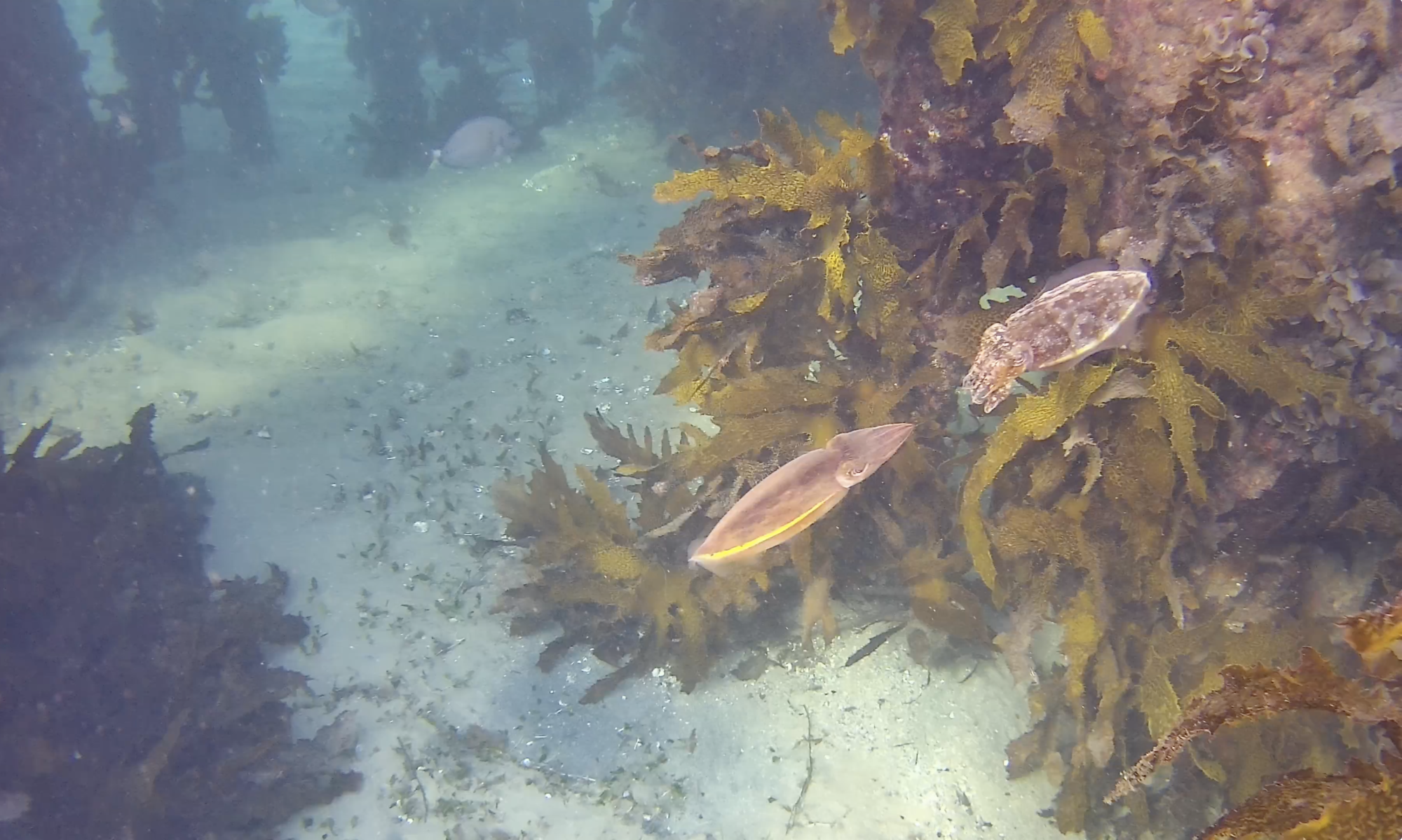

The Challenge of ROV Hazard Avoidance

ROV technicians / pilots will have at least one story about an ROV issue in the field for one reason or another: i.e. tether entanglement, power failure, loss of control, thruster failure… We certainly have had some close calls where our ROV technician has ended up in the water to retrieve their vehicle.

While some of us keep these stories to ourselves, we came across an article recently where an expedition’s primary ROV got entangled in nylon survey line and the back-up ROV sent to retrieve the primary vehicle also got stuck.

We are waiting breathlessly to hear how this story ends.

Full article at: Cassville-Democrat 08may24
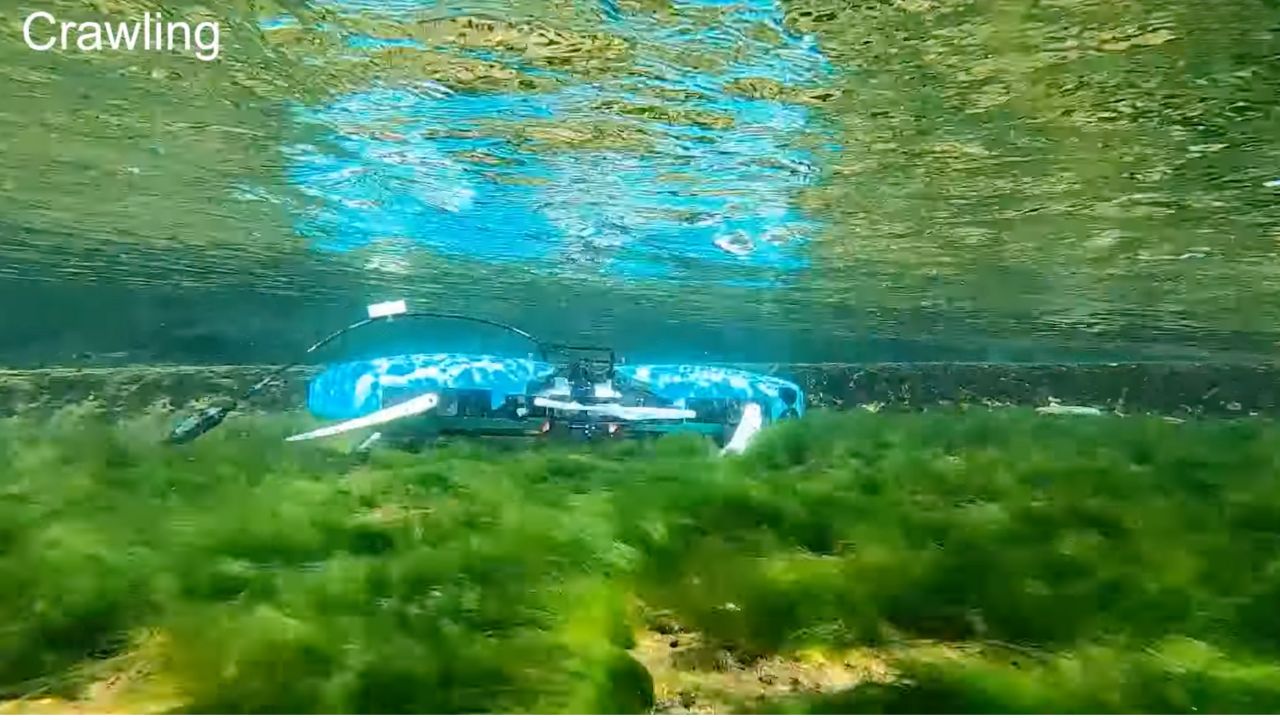
An ROV that can crawl, walk and swim?

Engineers at South Korea’s Pohang University of Science and Technology are developing a new ROV that doesn’t use propellers, rather is based on a salamander with fins and “flexible backbone” for locomotion. Named HERO-BLUE, this vehicle can crawl, walk, swim and wriggle through shallow-water areas not accessible by ROVs.

Full article at: CyberGuy.com 29apr24

Global Coral Bleaching Event happening now

NOAA just announced that the world is currently experiencing a global coral bleaching event – the fourth global event on record and the second in the last 10 years!

“As the world’s oceans continue to warm, coral bleaching is becoming more frequent and severe,” [Derek Manzello, Ph.D. and NOAA CRW coordinator] said. “When these events are sufficiently severe or prolonged, they can cause coral mortality, which hurts the people who depend on the coral reefs for their livelihoods.”

National Oceanic and Atmospheric Administration, News & Features

Full article at: NOAA 15apr24

AUVs aid in creation of “Ocean Digital Twins”

A “digital twin” is a virtual copy of a physical object or system that uses real-time data to monitor and simulate behaviour. This modelling can then identify and address issues before they occur, potential revolutionising how organisations operate and innovate.

Several ocean digital twin projects are already underway to recognize and try to anticipate the impacts on global environmental change on ecosystems.

One such project has completed field tests in near Ishigaki Island, Okinawa in Japan. Fujitsu, the National Maritime Research Institute, National Institute of Maritime, Port and Aviation Technology (NMRI), successfully acquired precise 3D data for mapping coral reefs, using AUVs, LiDAR and AI.

Full article at: Electronics Media 26mar24

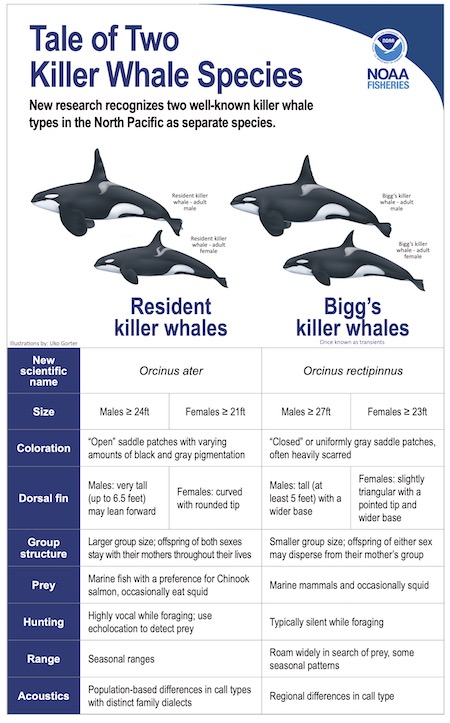
Scientists say not all Orcas are the same

Scientists in the Pacific Northwest are making the case for separate identification of two orca populations.

Orcas, also known as Killer whales, are one of the most widespread animals on Earth and have long been known as only one species, Orcinus orca, with different forms in various regions known as “ecotypes.”

Biologists have increasingly recognised differences between “resident” and “Bigg’s” ecotypes. Resident killer whales maintain tight-knit family pods and prey on salmon and other marine fish. Bigg’s killer whales, sometimes known as transients, roam in smaller groups, preying on other marine mammals such as seals and whales. (Killer whales actually belong to the dolphin family.)

Full details available at: NOAA Fisheries 27mar24