Scientists with with Advancing Knowledge of Methane in the Arctic (AKMA) discovered an underwater mud volcano in Norwegian waters using ROV Aurora from research vessel Kronprins Haakon:
https://youtu.be/hg9XQw0AJeU
Found at a depth of ~400m (1300ft), this underwater mud volcano erupted from within another older crater, that supports a vibrant ecosystem including anemones, sponges, corals, sea stars, and tube worms.
QYSEA has just announced their newest ROV model – the V6-EVO. Expected in Australia around June, the V6-EVO has brighter LEDs (5000 lumens as compared with V6’s 4000 lumens), increase frame rate camera (up to 60fps), and comes in pearl-white colour. This ROV will also be able to use a gripper.
The Phillipine Coast Guard recently announced that the vessel MT Princess Empress has been found at a depth of ~400m off Naujan, Oriental Mindoro. The vessel sank on 28feb23, causing an oil spill, and was found using a Japanese ROV named HOKUYO.
The BlueBoat is a very affordable robotic surface vessel, with an innovative hull design, endless expansion possibilities, and open-source BlueOS software. It is an ideal platform for hydrographic surveys, robotics system development and scientific missions.
It has a weedless hull and propeller design, rugged construction, and compact transport size, making it reliable and convenient to use, while its flexible electronics architecture, ample payload mounting areas, and open-source BlueOS software system make it an ideal platform for integration of sonars and other sensors.
The BlueBoat comes almost fully assembled and only takes a few minutes to get into the water. In addition to the boat, you’ll need:
Laptop – medium to high-end model with Windows 10, Mac, or Linux operating systems. iOS and Android are not officially supported at this time
We all experience heat waves on land, like the one that occurred not long ago at the start of autumn. But did you know that heat waves also happen underwater, at depth?
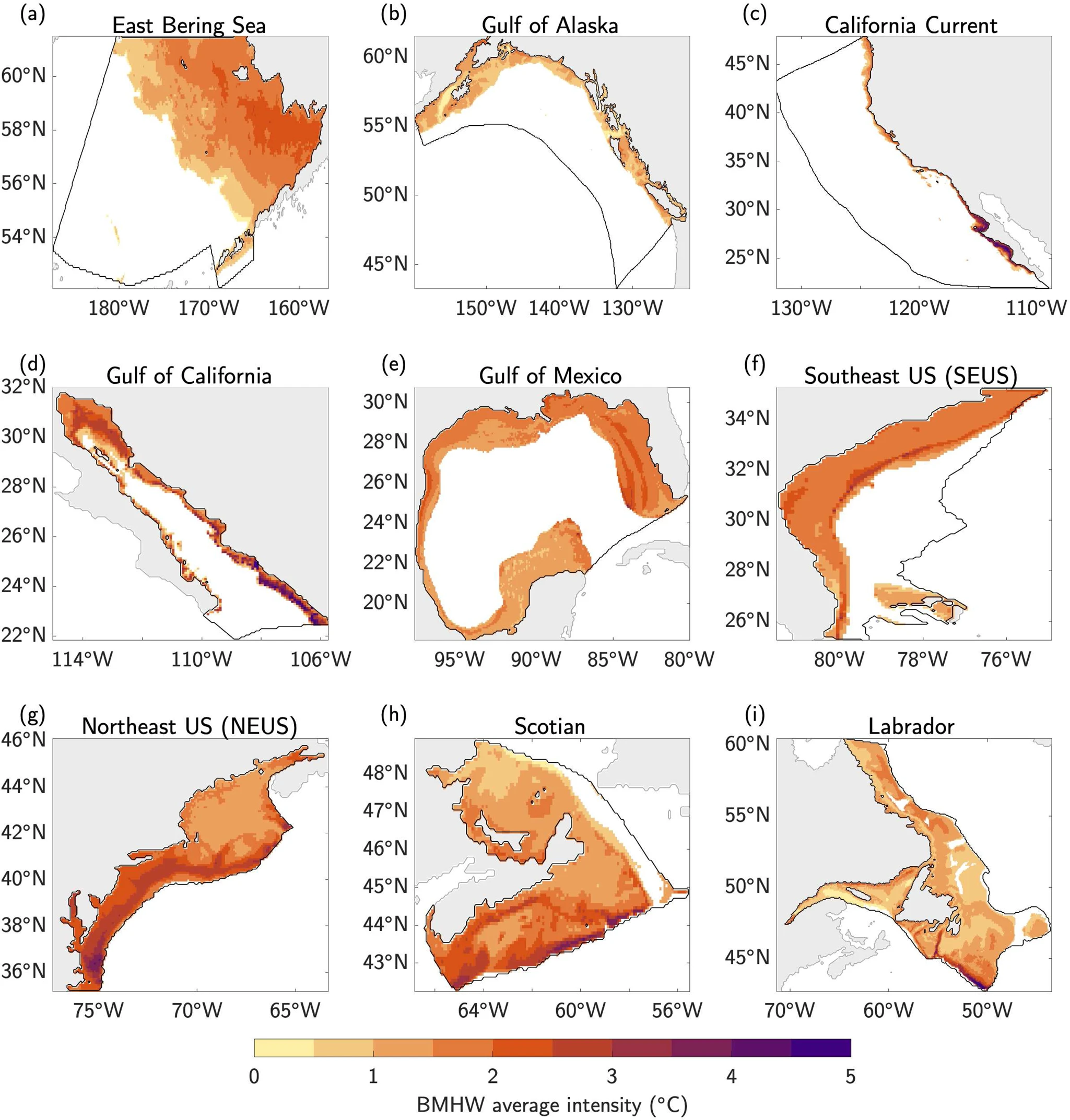
Researchers recently published a study of temperatures recorded at the bottom of the ocean around North America and found extreme warming along the seafloor can have significant biological outcomes. The intensity and duration of bottom marine heatwaves (BMHW) vary strongly with depth, and can be more intense and last longer than marine heatwaves at the ocean surface (SMHW).