
Reef-Safe Sunscreen

Summer is fast approaching in the southern hemisphere and we wanted to remind everyone about the impact of sunscreen choice on our marine habitats. A recent study has shown that ingredients like oxybenzone and octinoxate seep into young coral and contribute to coral bleaching. As a result, Hawaii has banned these ingredients in sunscreens and we encourage you to read the label before buying sunscreen this year. Tips:

  • Choose mineral sunscreens made from zinc oxide and titanium dioxide, and avoid products containing nano particles – i.e. look for ‘non-nano
  • Go non-toxic, paraben free and organic when you can!  These sunscreens may be a more expensive option but it is worth keeping this earth healthy because we will all benefit in the long term
  • Look for ‘water resistant’ sunscreen, because it will be more likely to stick to your skin and not wash off in the water
  • “Child friendly” sunscreens are more likely to contain natural ingredients
  • Use sunscreen alternatives to protect you from the sun.  Wear clothing to protect your skin in and out of the water. The less surface area you apply sunscreen to is less chemicals entering our marine ecosystems!

Here are a few Australian-made brands that you can look out for (in no particular order and no specific recommendations): Invisible Zinc, Sunbutter, Sun & Earth, and Surf Mud

Have a great summer, stay healthy, and be good to our environment!
GBR Coral Spawning Live

This weekend the coral of the outer Great Barrier Reef will be spawning in their once-a-year reproduction event. The ABC will be streaming live video from the GBR from Friday (tonight) at 8:30pm so check it out if you have time: Reef Live

Some background on creature you might see can be found at: ABC Science 04dec20 

Underwater “Trail Camera”

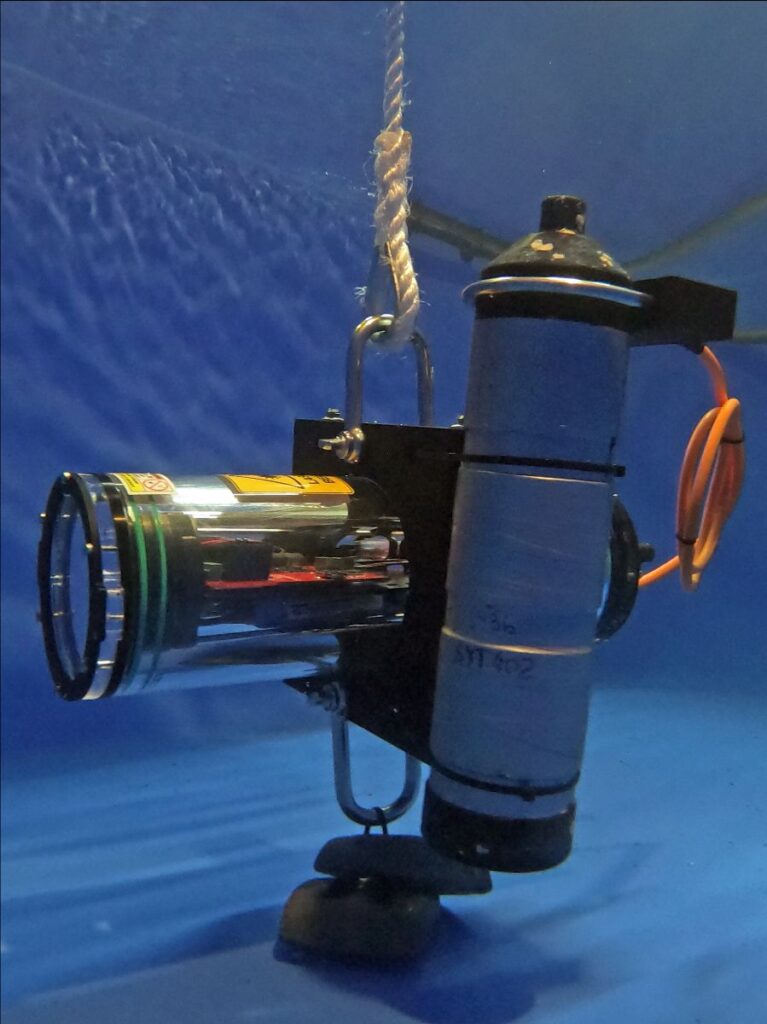
Check out this new, underwater “trail camera” by SpotX that is triggered by a Vemco acoustic tag:

Similar to a wildlife trail camera, the Spot X underwater camera trap can trigger a camera based on a range of input stimuli. The first use-case triggers a GoPro Hero 8 Black using the ping recorded by a VEMCO/InnovaSea VR2 receiver. However the system is flexible and can interpret PWM, RS-232 or any other analog sensor signal, and can be customised to work with many other cameras.

spotx.com.au/underwater-camera-trap/underwater-camera-trap

CSIRO estimates millions of tons of microplastics on ocean floor

The CSIRO recently released a report estimating microplastic build-up on the ocean floor and the results are not good. Using an ROV to collect 51 deepwater samples from the Great Australian Bight in 2017, scientists determined that microplastics are sinking to the ocean beds, finding some areas of zero plastic particles but others with up to 13.6 particles per gram (an amount ~25 times larger than previous studies).

“We estimate there are up to 14 million tonnes of microplastics in the seafloor. It’s worse than we thought.”

https://blog.csiro.au/14-million-tonnes-of-microplastics/

More details at: https://www.csiro.au/en/News/News-releases/2020/14-million-tonnes-of-microplastics-on-seafloor

ROV finds very rare squid in Great Australian Bight

Scientists at CSIRO and Museum Victoria were thrilled to find not just one but FIVE “super rare deep sea squid” in the Great Australian Bight. This large fin squid, Magnapinna, has extremely long, thin tentacles and what appear to be tightly coiled filaments. Scientists believe Magnapinna can quickly retract its filaments if needed. The only other cephalopod known to have retractable filaments is the vampire squid (Vampyroteuthis infernalis):

https://youtu.be/hRWd3oDlUrM

Here is a close-up of a 4 to 6m long Magnapinna spotted by MBARI off Hawaii:

More details at: Sciencex.com 12nov20 and Science Alert 11nov20