
UN’s Decade of Ocean Science

Did you know that 2021 is the start of United Nations’ Decade of Ocean Science for Sustainable Development?

Delivering Science for the Future We Want

Ocean Science combines a variety of disciplines (physical, geological and chemical oceanography as well as marine biology) that study and provide data on the global marine environment (marine organisms, ecosystem dynamics, ocean currents, waves, geophysical fluids dynamics, plate tectonics and the geology of the sea floor as well as fluxes of various chemical substances and physical properties within the Ocean and across its boundaries).

Over the decades, Ocean Science evolved to integrate new societal needs and encourage new partnerships among oceanographers working in different disciplines leading to new discoveries about the ocean’s role in climate regulation and coastal ocean processes.

Ocean Science can support business operations (shipping industry, fisheries and aquaculture, etc…) as well as conservation and management activities or coastal communities by predicting Ocean hazards preventing and mitigating disaster risks.  

For example, the discovery of oceanic eddies has been important for an understanding of ocean circulation, propagation of sound in the ocean, fisheries productivity, and other ocean processes.

https://www.oceandecade.org/about?tab=our-story

For more info, download their brochure here

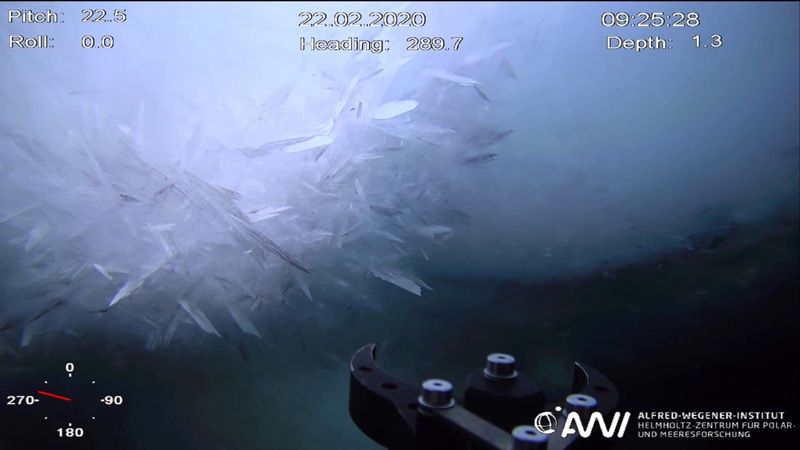
ROV “Beast” filming under Arctic Ice

Scientists from the Alfred Wegener Institute have been using an ROV, nicknamed “Beast” to explore and film under sea ice in the Arctic, as part of the Multidisciplinary Drifting Observatory for the Study of Arctic Climate Change (MOSAiC). The team found some amazing platelet ice crystals, feathery ice crystals that form at supercool temperatures and grow as large as a human hand, typically found in Antarctica, not the Arctic.

NOAA Discovers Deep Sea “Balloon-like” Jelly

A new species of carnivorous comb jelly (ctenophore) was found by NOAA’s ROV Deep Discoverer near Puerto Rico at a depth of ~4000m.

The comb jelly, or ctenophore, was first seen during a 2015 dive with the NOAA Office of Ocean Exploration and Research team.

Full article at: NOAA Fisheries 20nov20

Scientists describing the comb jelly species say it resembles a hot air balloon. Illustrations by Nicholas Bezio.

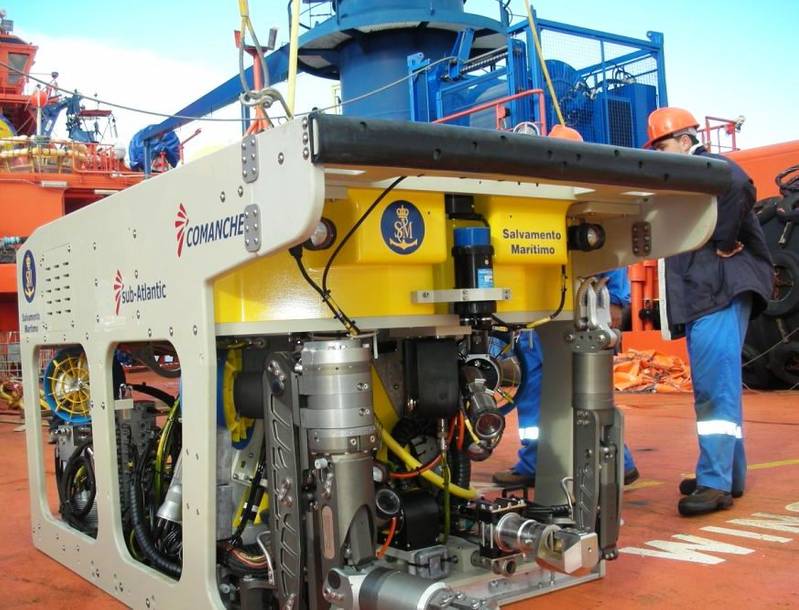
ROV assists in Aircraft Recovery

This week, the Spanish Maritime Safety and Rescue Society (SASEMAR) in cooperation with ACSM recovered the wreckage of a light aircraft Piper PA-34 Seneca, which fell into the Mediterranean Sea on Nov 3rd, off the coast of delta de l’Ebre, Spain, at a depth of 113 meters. ACSM deployed their Work Class ROV Sub-Atlantic ROV Comanche to locate the wreckage.

More details at: MarineLink 26nov20